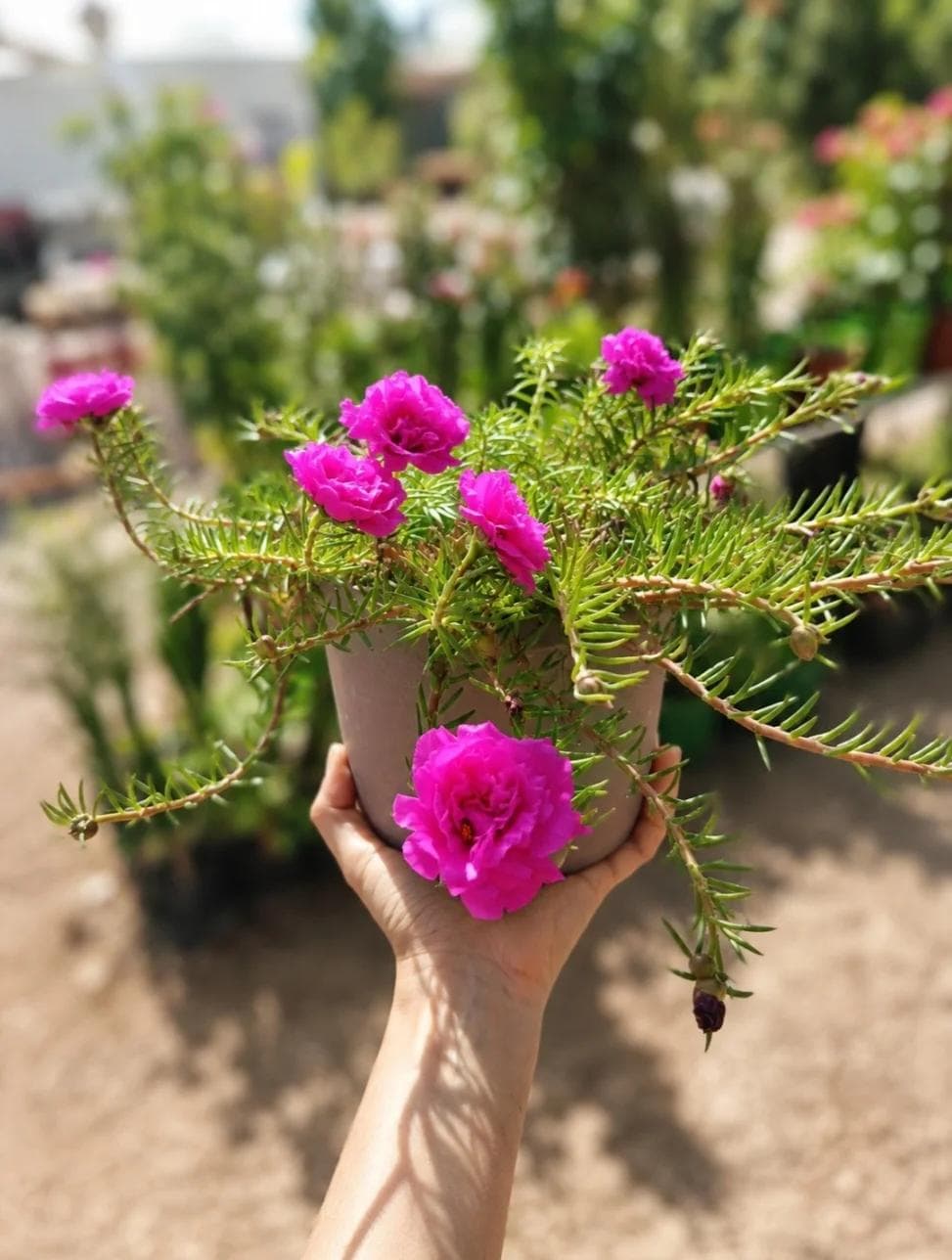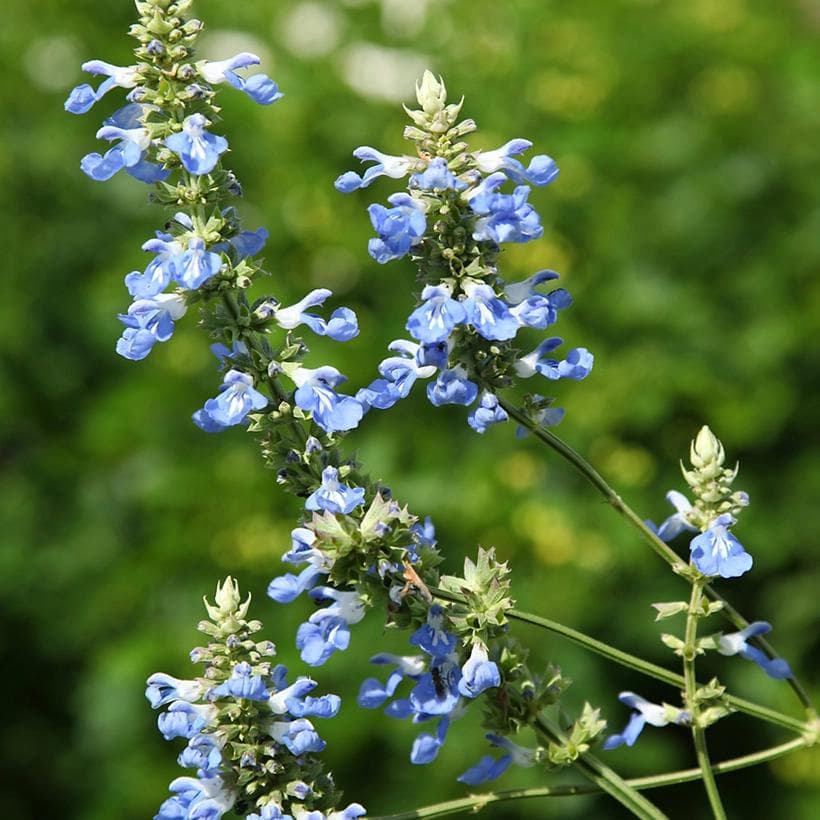
Origin
South America
Light
Full sun
Watering
Weekly
Care
Easy
Flowering
Flowering
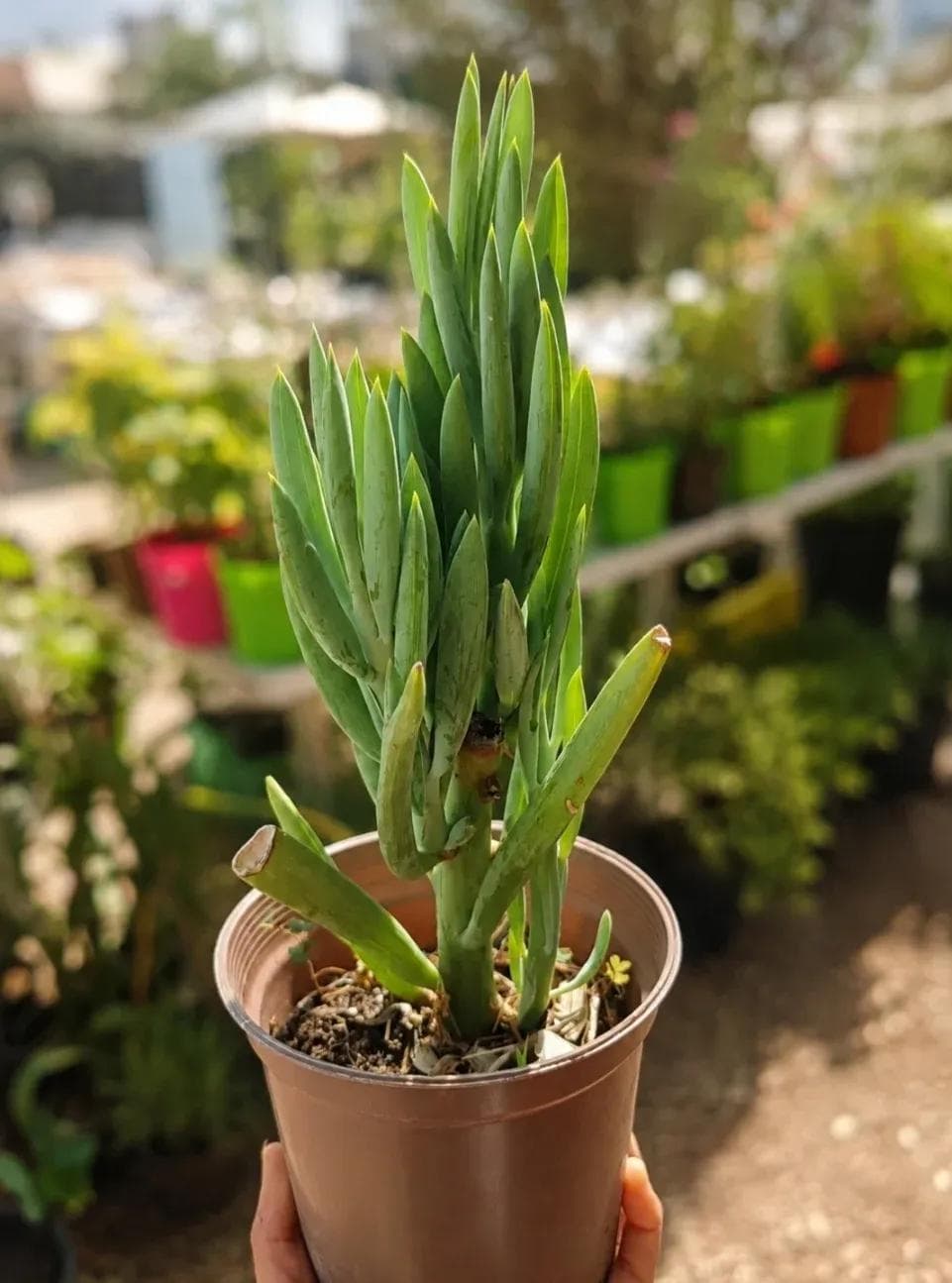
A carpet of frosted blue fingers from the semi-arid Cape: the colour is not a pigment but a layer of wax.
A guide to ensuring your botanical companion thrives.
South Africa
Full sun
Rarely
Easy
Native to the dry country of South Africa, it raises cylindrical leaves a few centimetres long, coated in a waxy film that reflects light and slows evaporation; it is this film, not the green of the leaf, that the eye reads as blue.
Long filed under Senecio, it moved to the genus Curio in the late 1990s. In California it is planted as firebreak edging around houses: full of water and free of dry wood, it burns poorly. Every part is toxic if eaten.
"Rub a leaf with your finger and the blue is gone: it will never come back on that one."
Full sun, no hesitation
The stronger the light, the thicker the wax and the truer the colour; in shade the stems stretch and the blue fades to a dull green.
Water sparingly
Wait until the mix is dry all the way through, and cut back to almost nothing in winter: excess water splits and rots the leaves.
Cuttings without equipment
A ten-centimetre stem, dried for two days and laid on gritty mix, roots in two to three weeks with no hormone.
More botanical treasures to discover.